




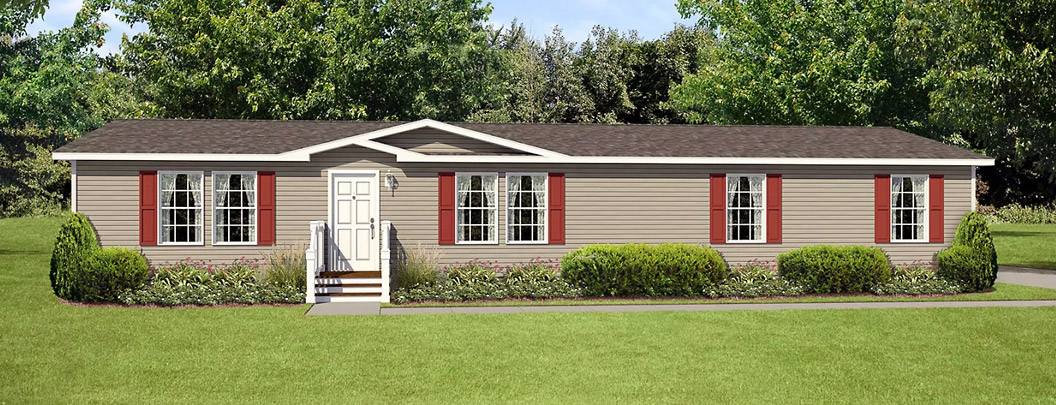
Mobile, manufactured, modular ? call them what you will, these affordable homes are gaining popularity and respectability
By David Krotz
Winona Daily News
www.winonadailynews.com
Sunday, November 19, 2006
Four years ago, after living in an apartment in Minneapolis, Jerry Sandin moved to Winona to retire. He wanted affordable housing.
The real estate options he found ?would take a big chunk out of your pocket,? he said. He settled on a new two-section manufactured home in Hidden Valley. He has three bedrooms, two baths and a two-car garage on his rented lot.
?I?ve got a great place. It?s affordable. It?s nice. And I paid $70,000,? he said. ?You get a fairly nice home for a reasonable price and you get a new home, so you don?t have to fix up anything?
What is affordable?
Affordable is a subjective term. The generally accepted definition is a family should spend less than 30 percent of its annual income on housing. Some developers tout $140,000 homes as affordable. With a $7,000 down payment, that home?s monthly mortgage payment would be $1,000 or more.
A Winona National Bank mortgage loan officer, Jenna Koeller, says affordable houses fall in the $90,000 to $120,000 range. Who can afford a $90,000 house? According to Koeller, someone with an income of $24,000.
There are houses on the market for under $90,000, but a homebuyer on a budget would not likely find a new one. That?s why many turn to manufactured and modular homes. Ignoring the cost of a lot, these homes can be purchased and installed for $90,000 or less.
Rick and Barb Thomsen moved into a 14-foot by 70-foot manufactured home in Hidden Valley 14 years ago because it was affordable and cheaper than any used home they could find in Winona.
?In the cheaper older homes, we would have had to put a lot of money into them,? Barb Thomsen said.
How much bang for your buck?
Manufactured homes sell for about $35 per square foot. For a 1,200-square-foot single-wide, that?s about $45,000. David McCorquodale, owner of Winona Homes said a single-wide with appliances, drapes and floor coverings can go for as little as $30,000, without the lot and foundation.
Modular homes, which typically consist of two, four, or five units that are assembled together, cost about $48 per square foot. As a rule of thumb, completed modular homes cost about $10,000 less than the comparable stick-built house, although large ones can cost more than $149,000, McCorquodale said.
The birth of ?mobile homes?
Manufactured and modular houses are a modern phenomenon that trace their roots to the era of the trailer house. For some, trailer carries a negative connotation. That?s why the industry adopted ?mobile home.? Trailer parks became ?mobile home parks.? Now they are ?manufactured home communities.?
?They have come a long way in terms of character,? Koeller said. ?We have customers who have manufactured homes and you can?t tell the difference.?
But the change isn?t just a name. The structures themselves have changed.
About 10 years ago, manufacturers stopped making the mobile homes with flat metal roofs and wheels. They started using wood framing and floor joists, capped the house with a pitched roof and shingles and put siding on the walls. Houses with two or more sections were joined together at the site. Once there, the house was set on a basement or cement foundation or piers and secured to the ground.
?We can order a house and in 10 weeks it will be here. Two weeks later you can be moving in,? said Jerry Foster who, along with his son Ren Foster, owns the Premier Homes dealership in Winona and the Hidden Valley Manufactured Home Community where Sandin lives.
?You can?t begin to stick build (a house) in 10 weeks,? Foster said.
Business is booming
About 44,000 modular homes were built in 2005, according to the National Association of Home Builders. That?s an increase of 26 percent in a decade. Including apartments, modular construction accounted for seven percent of the 3 million residential units built nationwide last year.
The modular units are built in factories and trucked to their sites.
The U.S. Federal Emergency Management Agency says modular houses are stronger than traditional wood frame homes, with as much as 30 percent more materials in order to withstand the stresses of being moved over the highways.
As for financing, banks treat modular houses the same as other houses, said Mary Stoltman, a mortgage lender with Fortress Bank.
?We don?t really treat them differently as long as they?re fixed to a foundation. In the past, it was more difficult to get mortgages,? she said.
Winona National?s Jenna Koeller said mortgages rules and regulations differ for manufactured homes, as compared to modular construction, depending on whether they are on the owner?s land or in a mobile home park.
30 years and counting
McCorquodale?s Winona Homes has grown along with the industry. In business for 30 years, he calls himself the largest home builder in Winona?s history. He started in 1976 selling mobile homes along Highway 61 in Goodview. In the 1980s and 90s, he sold a lot of double-wides; since then, the emphasis has been on turn-key modular homes.
He now operates on five acres with 15 model houses.
Winona Homes also builds subdivisions, such as a 16-house neighborhood in Stockton, and is looking to build more.
?We?ve sold homes to multi-millionaires and first-time home buyers,? McCorquodale said.